


.svg)

Desktop 5-axis CNC with a proprietary offline controller, not GRBL
Use with Easel Pro →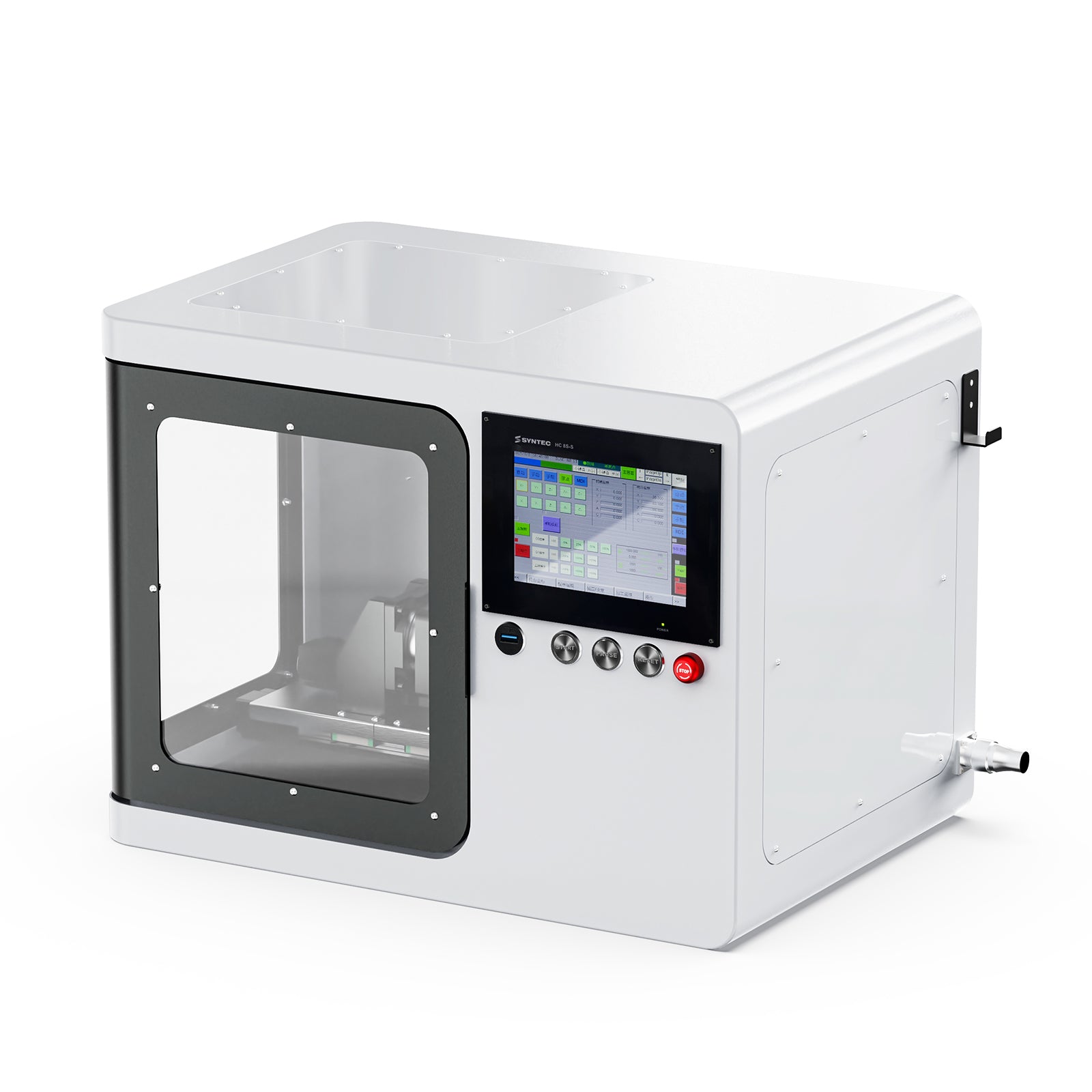
The Two Trees X5 is a desktop 5-axis machine with 80 x 80 x 80mm of XYZ travel on a 60mm diameter turntable workbench, built for wood, plastic, and wax. It moves on a 1204 ball screw and 12H linear guide driven by servo motors, controlled by Two Trees' own 'New Generation system'. Two Trees does not state GRBL anywhere on this machine's product page, and does not publish a spindle wattage or RPM.
Every cut starts with one formula: Feed Rate = Spindle Speed (RPM) x Chip Load x Number of Cutting Edges (flutes). Chip load is the thickness of material each cutting edge removes in one revolution of the bit. This number comes from the manufacturer of the bit, which publishes a chip-load chart for each bit diameter and material. Look up your exact bit and material, start from the middle of the published range, and you have the third number in the formula. The chart below shows the recommended spindle speed for each material and bit type.
Two Trees does not publish a spindle wattage or maximum RPM for the X5, so check the plate on your spindle before you start. Note that this machine's controller is not stated as GRBL anywhere on its page, so whether it can run Easel-generated toolpaths at all is unconfirmed; the guidance below is the same general logic that applies to any CNC. The X5 rides on a 1204 ball screw and 12H linear guide with servo motor drive, a rigid layout for its size, but its 80 x 80 x 80mm working volume and wood/plastic/wax material list point to small desktop engraving work, not deep full-width cuts. Depth per pass is where the machine's build sets the limit: a truly rigid machine with a powerful spindle can cut as deep as the bit is wide in a single pass, but that takes real spindle torque, a drive train and clamps that hold firm, a gantry that will not flex, and enough mass to soak up vibration. Stay shallow regardless: push too deep and the bit deflects and chatters, leaving scalloped edges, or it rubs instead of cutting and burns the material. The fastest way to dial in a cut is to see what has already worked for other people.
Worked example for feed rate: 1/8in (3.175mm) two-flute solid carbide end mill in hard wood. The chart says 16,000 RPM. Two Trees does not state a maximum RPM for this spindle, so check the plate on yours and use its actual top speed in place of 16,000 if it is lower. With the bit maker's 0.025mm per tooth (0.0010 in): 16,000 x 0.025 x 2 = 800 mm/min (31 in/min) feed. For depth per pass, start shallow and check Community Cut Settings in Easel for what works on this machine. If the cut sounds strained, reduce the depth, not the feed. Slowing the feed below the chip load makes the bit rub instead of cut.
Community Cut Settings shows the spindle speed, feed rate, and depth per pass other makers actually run for your machine, material, and bit.
The Two Trees X5 runs Two Trees' own proprietary "New Generation system," a standalone touchscreen controller, not GRBL or FluidNC, so Easel's live control (the Easel Driver and Rapid Connect) cannot drive it directly. To use Easel with this machine, set up a Non-GRBL Machine Profile in Easel, design your project as usual, then use Project > Download G-code to save the toolpath as an .nc file. Load that .nc file onto the X5 the way its New Generation system expects: via a USB flash drive (or the machine's keyboard controls), then select and run the file from the machine's own touchscreen.
Try Easel Free →
Create your free Easel account and connect your machine in minutes.
Easel Free Trial →